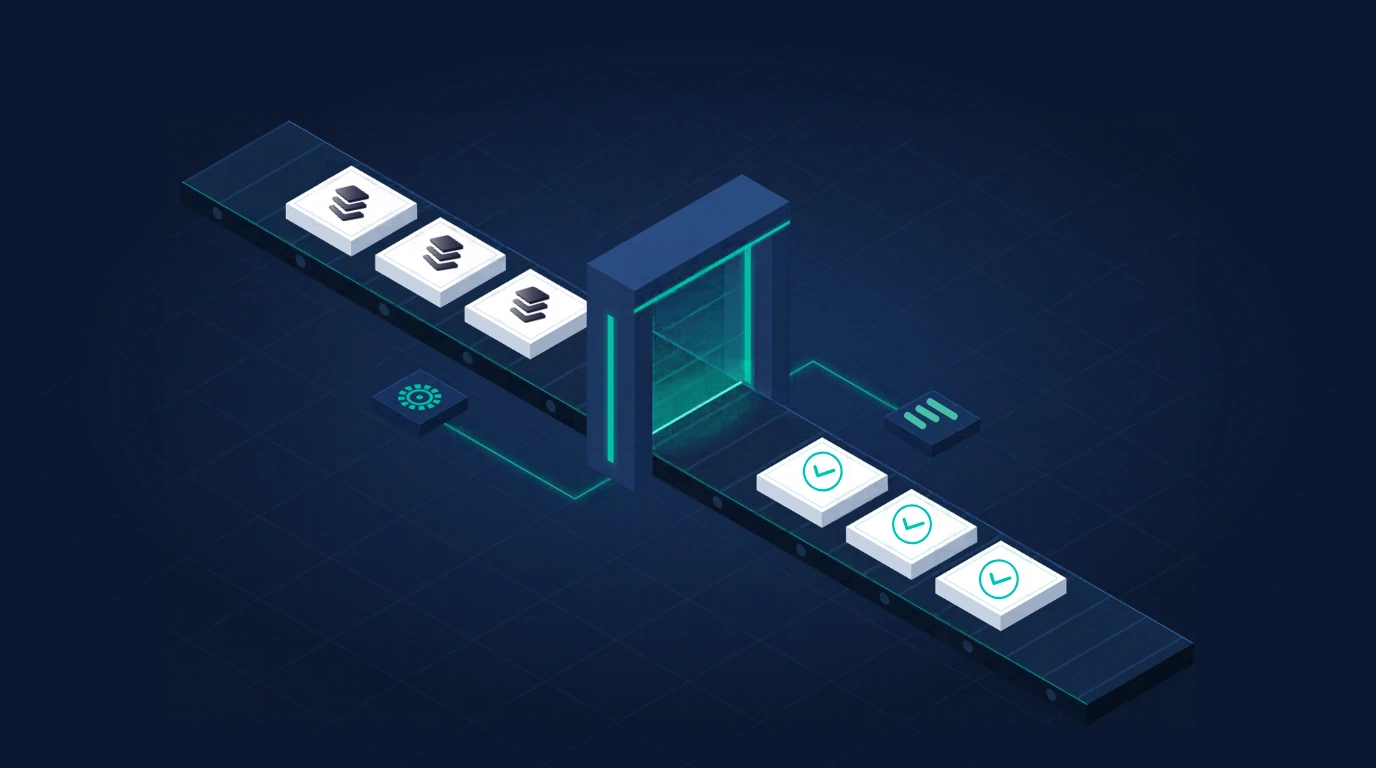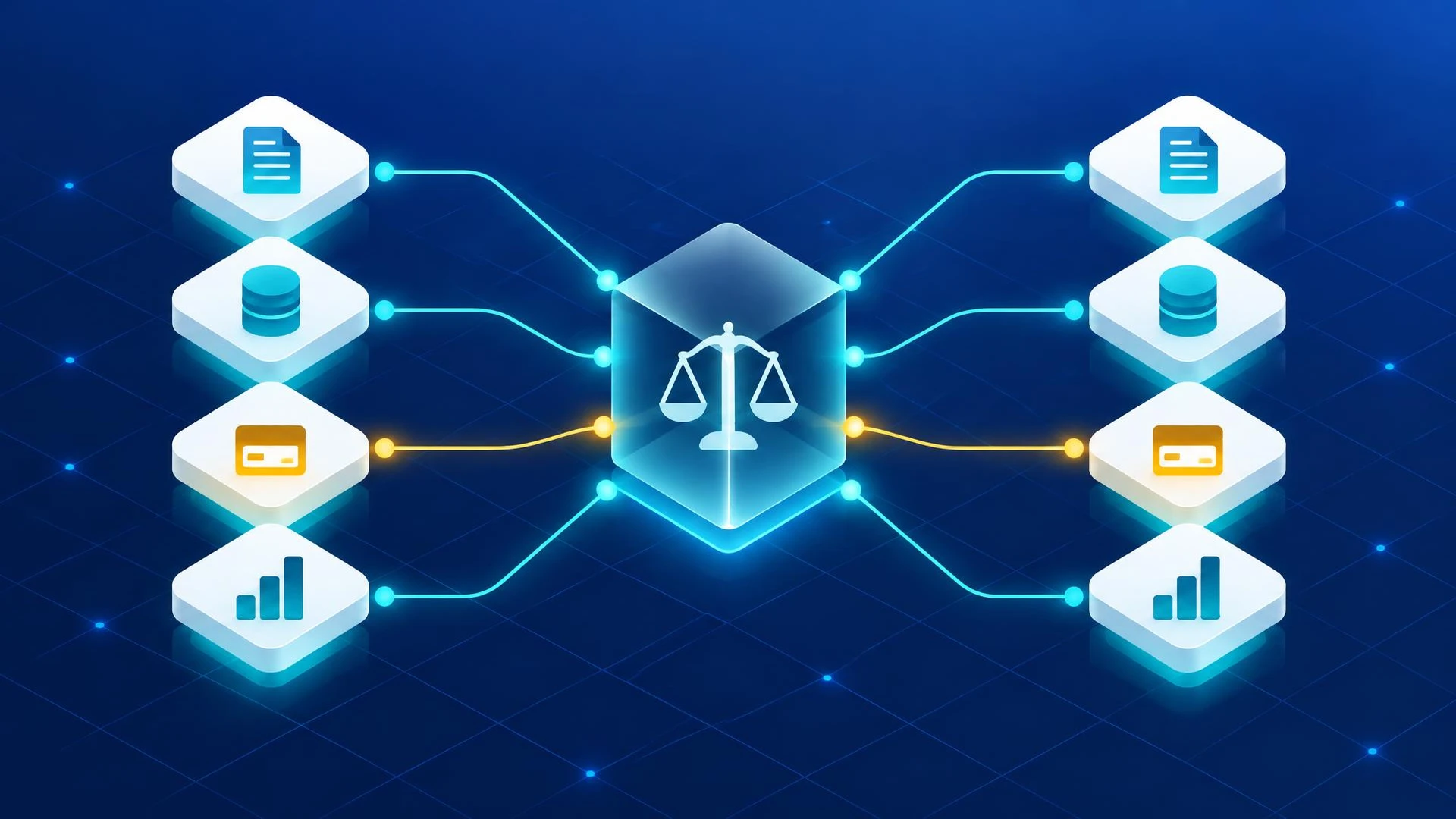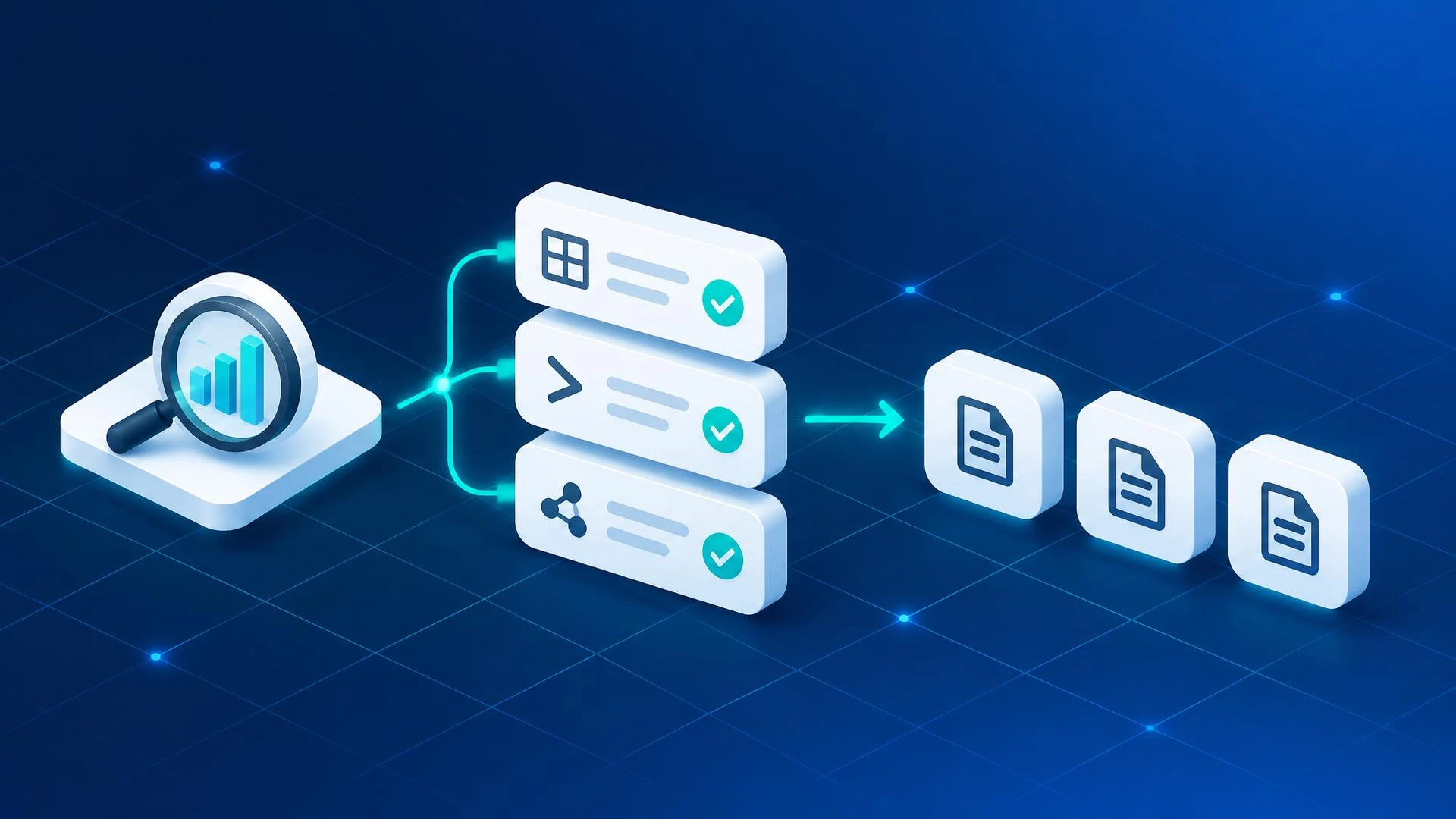
In August 2020, a single confusing dropdown in Citigroup's payments system led the bank to wire nearly $900 million of its own money to the wrong recipients. Twenty-one years earlier, a $125 million Mars spacecraft burned up in the atmosphere because one team used metric units and another used imperial. The disasters in this guide span six decades and twelve industries, but they all share a single ancestor: poor data quality that nobody caught in time.
Each of these real-world examples cost organizations millions - sometimes billions - and in a few cases, lives. We've grouped them by what went wrong, what it cost, and what teams should take away. The point isn't to catalog the past. It's to recognize the pattern, because the next disaster of this kind is being built right now, inside someone's poorly validated pipeline.
What does poor data quality actually cost a business?
The headline cases in this guide are the dramatic ones - a billion-dollar fund miscalculation, a spacecraft lost over a units mismatch. They make the point, but they aren't representative of what most organizations actually face. The everyday impact of poor data quality is quieter, more cumulative, and harder to attribute to any single decision.
Gartner's most-cited estimate puts the average cost of poor data quality at $12.9 million per year, per organization - and most companies underestimate the real number because the costs are scattered across departments. A marketing team's campaigns miss their targets because the customer database is stale. A finance team manually reconciles ledgers because two source systems disagree. An ML model in production quietly degrades because no one noticed the upstream feed changed shape. None of these show up on a single P&L line, but together they're often more expensive than the headline disasters that make the news.
The recurring consequences of poor data quality fall into four predictable categories:
- Direct financial loss - incorrect trades, mispriced inventory, refund-and-recovery cycles, regulatory fines (Equifax's $700M settlement, Citi's $400M penalty)
- Operational drag - engineers and analysts spending 30-40% of their time cleaning, reconciling, and re-running broken pipelines instead of building new capability
- Eroded trust in data itself - once business users stop trusting the dashboards, they start keeping their own spreadsheets, and the whole data investment quietly fragments
- Compounding downstream errors - bad data trained into a model, copied into a warehouse, summarized in a board report. By the time it's caught, the dependency chain stretches across teams
These categories are why the case studies below matter beyond their entertainment value. Each one is a worst-case version of a pattern that's happening, in smaller form, inside ordinary organizations every day.
1. Citigroup's $900M Revlon Wire Transfer (2020)
Cost: $500M+ in unrecovered funds (after years of litigation)
In August 2020, Citigroup intended to send Revlon's lenders a $7.8M interest payment. Instead, due to a confusing internal UI and human error in entering payment data into the bank's "Flexcube" system, Citi accidentally wired out nearly the entire $900M loan principal - its own money - to dozens of hedge funds. Several refused to return the funds, arguing they were owed the money anyway, and Citi spent years in court trying to recover it. The bank was also fined $400M by regulators for "long-standing failure to establish effective risk management" partly tied to data and operational controls.
Lesson: Critical financial workflows need data validation guardrails, confirmation steps, and clear UI design - not just well-trained operators.
2. Zillow's $881M iBuying Collapse (2021)
Cost: $881M in write-downs, 25% workforce laid off, entire business line shut down
Zillow's "Zillow Offers" home-buying program relied on a machine learning model to predict home prices and decide what to pay sellers. The model's data inputs - based largely on historical pricing patterns - failed to account for the volatile, post-pandemic housing market, leading Zillow to systematically overpay for thousands of homes. By late 2021, Zillow was sitting on a portfolio of homes worth less than what they'd paid, took an $881M write-down, laid off 25% of the company, and shut the entire iBuying business down.
Lesson: AI and ML models are only as reliable as the assumptions baked into their training data. Continuous monitoring of data drift - especially during volatile periods - is essential when algorithms make autonomous, high-stakes decisions.
3. NASA's Mars Climate Orbiter (1999)
Cost: $125 million spacecraft lost
A contractor provided navigation data in English units (pound-force seconds) while NASA expected metric units (newton-seconds). This data quality failure caused the spacecraft to enter Mars' atmosphere at the wrong angle and disintegrate.
Lesson: Data standardization and validation at interfaces is critical.
4. Knight Capital Trading Glitch (2012)
Cost: $440 million in 45 minutes
A software deployment error combined with bad data configuration caused Knight Capital's trading algorithms to execute millions of errant trades. The company lost $440 million in 45 minutes and eventually had to be acquired.
Lesson: Test data configurations thoroughly before production deployment.
5. London Whale Trading Losses (2012)
Cost: $6.2 billion
JPMorgan Chase's trading losses were partially attributed to a spreadsheet error where cell values were divided instead of averaged. This data quality issue contributed to massive risk miscalculations.
Lesson: Critical calculations require validation and audit trails.
6. Equifax Data Breach (2017)
Cost: $700 million in settlements
While primarily a security breach, data quality issues contributed - Equifax couldn't accurately identify all affected individuals because of poor data management practices and duplicate records.
Lesson: Data quality and security are interconnected concerns.
7. Healthcare.gov Launch Failure (2013)
Cost: Hundreds of millions in fixes
The Affordable Care Act website launch failed partially due to data integration issues between federal and state systems. Inconsistent data formats and validation failures prevented users from enrolling.
Lesson: Test data integration thoroughly before launch.
8. Fidelity Magellan Fund Error (1995)
Cost: $2.6 billion accounting error
A missing minus sign in a spreadsheet calculation led Fidelity to overstate the fund's net investment income, forcing them to revise projections and face significant embarrassment.
Lesson: Validate financial calculations with automated checks.
9. MI5 Telephone Number Error (2011)
Cost: Unknown (security implications)
A formatting error in MI5's database caused thousands of telephone numbers to be incorrectly stored, leading to surveillance of wrong numbers and potential security breaches.
Lesson: Data format validation is essential, especially for sensitive operations.
10. Therac-25 Radiation Overdoses (1985-1987)
Cost: Multiple patient deaths
A medical radiation therapy machine delivered fatal radiation overdoses due to software errors that included data handling issues in the machine's programming.
Lesson: Data quality in safety-critical systems requires extraordinary rigor.
11. Canadian Gun Registry Failure (2000s)
Cost: $1 billion over budget
Canada's firearms registry went massively over budget partly due to data quality issues including duplicates, inconsistencies, and validation failures in registration data.
Lesson: Anticipate and address data quality from project inception.
12. COVID-19 Reporting Errors (2020)
Cost: Public health impacts
Multiple countries experienced data quality issues in COVID reporting, including UK's loss of 16,000 cases due to Excel row limits, affecting public health response and trust.
Lesson: Critical systems need appropriate tools and validation.
Key Takeaways
- Poor data quality has caused individual incidents of $900M+ at single companies.
- The common pattern: simple inputs (a wrong unit, a missing minus sign, a confusing UI) propagating unchecked through systems that trusted them
- Most disasters in this list were preventable with validation at interfaces, audit trails, and automated checks
- AI and ML systems inherit data quality problems - and amplify them at scale (see Zillow's $881M iBuying collapse)
- The cost of preventing data quality failures is consistently smaller than the cost of one significant failure
Where most organizations get this wrong (and what actually prevents it)
Read the case studies above and a frustrating pattern emerges: in nearly every disaster, the failure was technically preventable. The bad data passed through systems that could have caught it - if the right validation had been running in the right place at the right time. The reason it wasn't usually isn't incompetence. It's that data quality investment tends to lag behind data complexity.
Most organizations rely on a patchwork: ad-hoc SQL checks, some Great Expectations tests buried in a dbt project, a quarterly audit, a downstream BI dashboard that "looks wrong" if something breaks. Each layer works in isolation. None of them catch a units mismatch passed from a vendor file. None of them catch a model whose training data has quietly drifted. None of them generate the audit trail a regulator will ask for six months later.
The shift that prevents the next entry on this list is moving from periodic, point-in-time checks to continuous data validation that runs at every stage of the pipeline - extraction, transformation, load, and post-load - with automated reconciliation between source and target, profiling that surfaces anomalies before they reach production, and an audit trail that traces any discrepancy back to its origin. That's the operating model behind RightData's DataTrust platform: a unified layer for testing, reconciliation, and continuous monitoring that's purpose-built for the failure modes in the case studies above - the migrations, the transformation logic, the drift, and the audit requirements.
It's not the only way to build this discipline. But the case studies make one thing clear: the organizations that ended up on this list weren't the ones investing too much in data quality.
Conclusion
The instinct after reading a list like this is to file it under "extreme cases." That instinct is wrong. The disasters made the news because of their scale, but the underlying mechanics - a mismatch nobody validated, a calculation nobody audited, a model nobody monitored - happen at smaller scale in ordinary organizations every week. The difference between "incident report" and "industry case study" is usually just how much was at stake before someone noticed.
Which means the useful question isn't whether your organization is exposed to a failure like the ones above. It's where, specifically, the next one is currently being built.
Frequently asked questions
Is every technology incident a data quality failure
No. Incidents can involve software behavior, security, operations, models, data, or several interacting causes. Use the primary record to establish the mechanism.
Can a validation tool guarantee prevention
No. A tool can evaluate defined requirements within its scope. Prevention also depends on design, coverage, implementation, and accountable operation.
What should teams copy from a historical example
Copy the discipline of identifying the mechanism and testing an appropriate requirement. Do not copy a headline loss as a universal estimate of another organization's risk.